

Define Far-right
History Speaks Volumes

I often refer to the far-right on 𝕏 and am increasingly met with the response, ‘define far-right’. So. Here goes.
The Far-Right. Who are they? How can we classify it? Is Farage far-right?
A term that is used liberally in the media by some, and shied away from by many. What’s the history and who, in our current political ecosystem, falls into this bracket?
When I write posts on 𝕏 about people in this group, it triggers avalanches of replies in the vein of: “are the far-right in the room with you now?”, “Labour are the real far-right” or my personal favourite, “Reform are left wing, we need a real far-right party”. That last one is quite a worry and one I’ll come back to in a bit.
Far-right is a broad brush definition so it isn’t fair to label everyone on the right of politics as far-right, not at all, but there are some checks we can run, in order to determine who is, I’d contend.
Firstly, we should know a bit about the history of the term; where and when did it begin?
Well … it tracks all the way back to the French Revolution and the French National Assembly in 1789. It looked like this.1
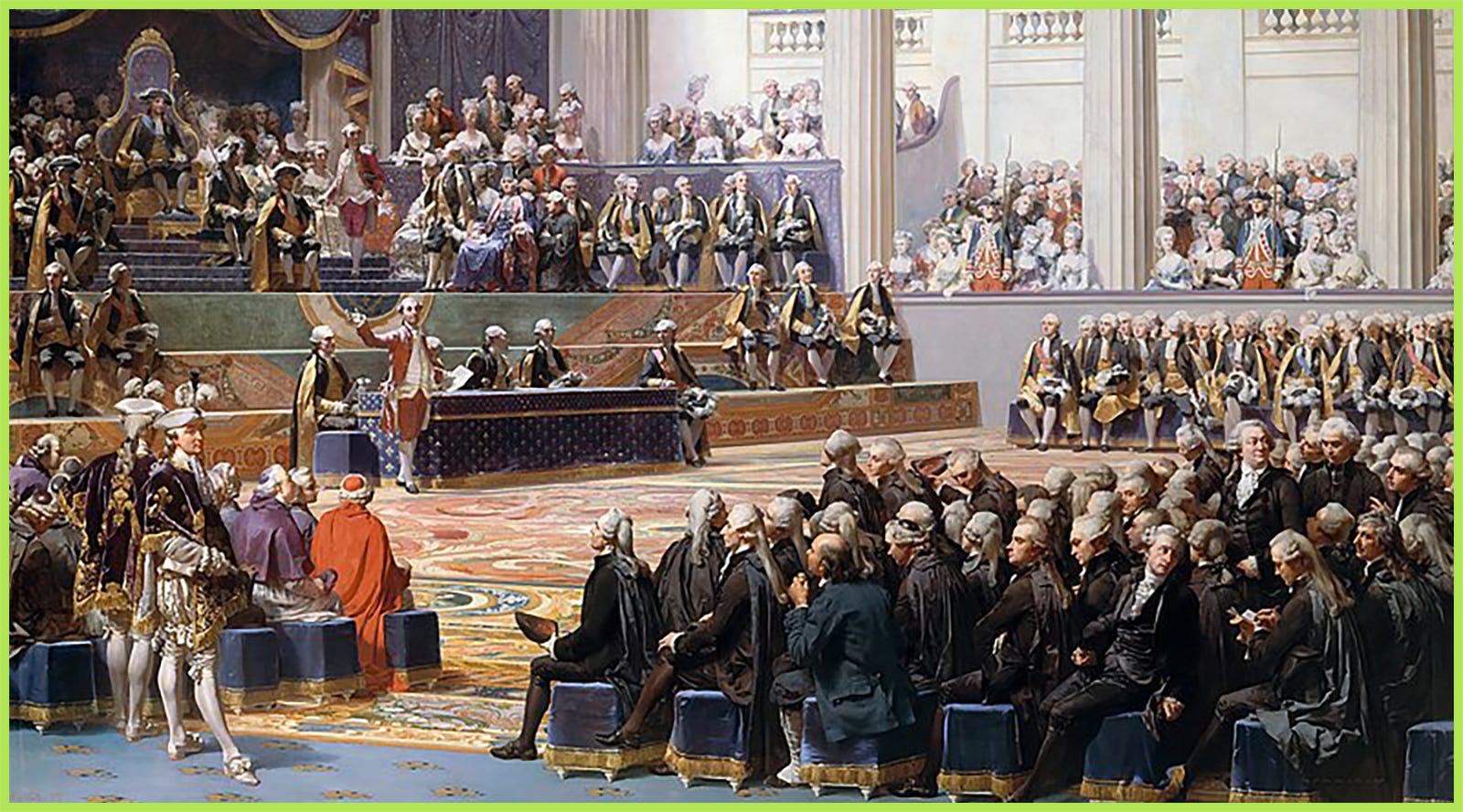
The seating of the members at this meeting was determined by political leaning — those considered to be radical, revolutionary, or liberal, were seated on the left of the presiding officer, while those with conservative, monarchist, or traditionalist leanings sat on the right side of the chamber.
The nomenclature of the left and right of politics was borne — originally, la droite and la gauche; the right and the left were literal representations of a seating plan around King Louis XVI.
Time and tide rolled onwards and throughout the 19th century, ‘the right’ became symbolic of religion, nationalism and supporters of the traditional social hierarchies — the status quo.
While this article is specifically about the far-right, the origins of the far-left stem from the very same source but with polar opposite viewpoints — those on the left/far-left pursued change and reform; a move away from the monarchy and the church.
This is not a history lesson, so, please put your hands down at the back and leave all questions until the end. There isn’t enough time to go through the entire history of the political left and right, let alone those pesky liberals in the middle [I may come back to that at a later date]. Liberté, égalité, fraternité — the origin of modern politics? Probably.
As time marched on, throughout the 19th century, the right and left started to form their own, very distinct ideologies, and by the time we reach the turn of the 20th century, the extremes were beginning to emerge.
The far-left gave us Marxism and Communism while the far-right gave us Fascism and, of course, ultimately, the Nazis.
I would very much doubt that anyone reading this article thinks along these lines, but it has to be said … the Nazis were not socialists. I wanted to head that right off at the pass, as it’s a ludicrous assertion that is oft bandied about by those on the far-right. It gave me no pleasure at all to see a former Minister of State for Security, Tom Tugendhat, declare on 𝕏 last week that “fascism is a form of socialism”. No Tom. It really isn’t. At the time of writing, the post is still up.
Tracking the far-right after the war takes us through a forest of ultranationalists, anti-communists and fascists before emerging into the clearing of 21st century populist politics and a burgeoning rebirth of the extreme factions that show us who they are today.
I think it serves to give some historical context to the debate. We are forever doomed to repeat our mistakes if we don’t learn from history — to plagiarise and paraphrase George Santayana.
Let’s move things to today and where our current far-right revival came from.
After the Second World War, things bubbled along and started to take some roots during the 1970s with groups like the National Front, an openly racist, extreme far-right group founded by journalist A.K. Chesterton in 1967. You may know them for some of their previous work, like the Battle of Lewisham.
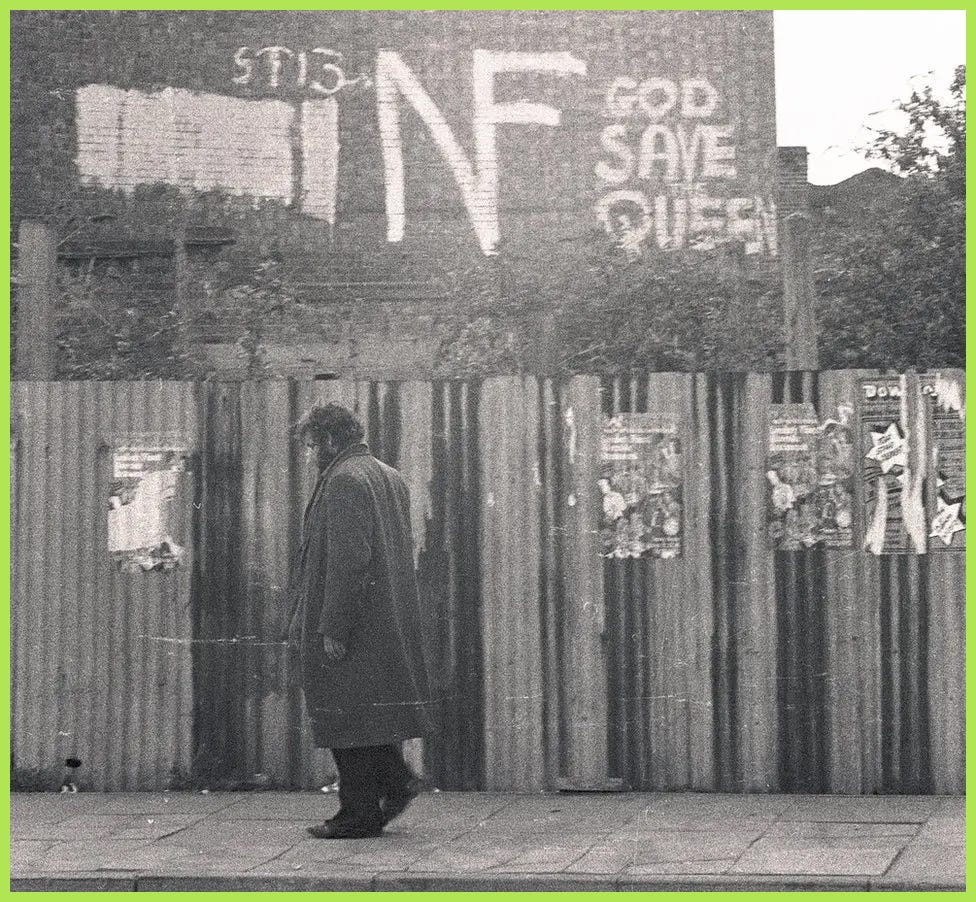
The 80s were seriously tough for those in marginalised communities across the UK, it seemed as though racism was being freely adopted but, as the Battle of Lewisham, showed, a resistance was forming and actually, the racists were a small minority group that made a huge amount of noise — a theme that will develop over the coming decades.
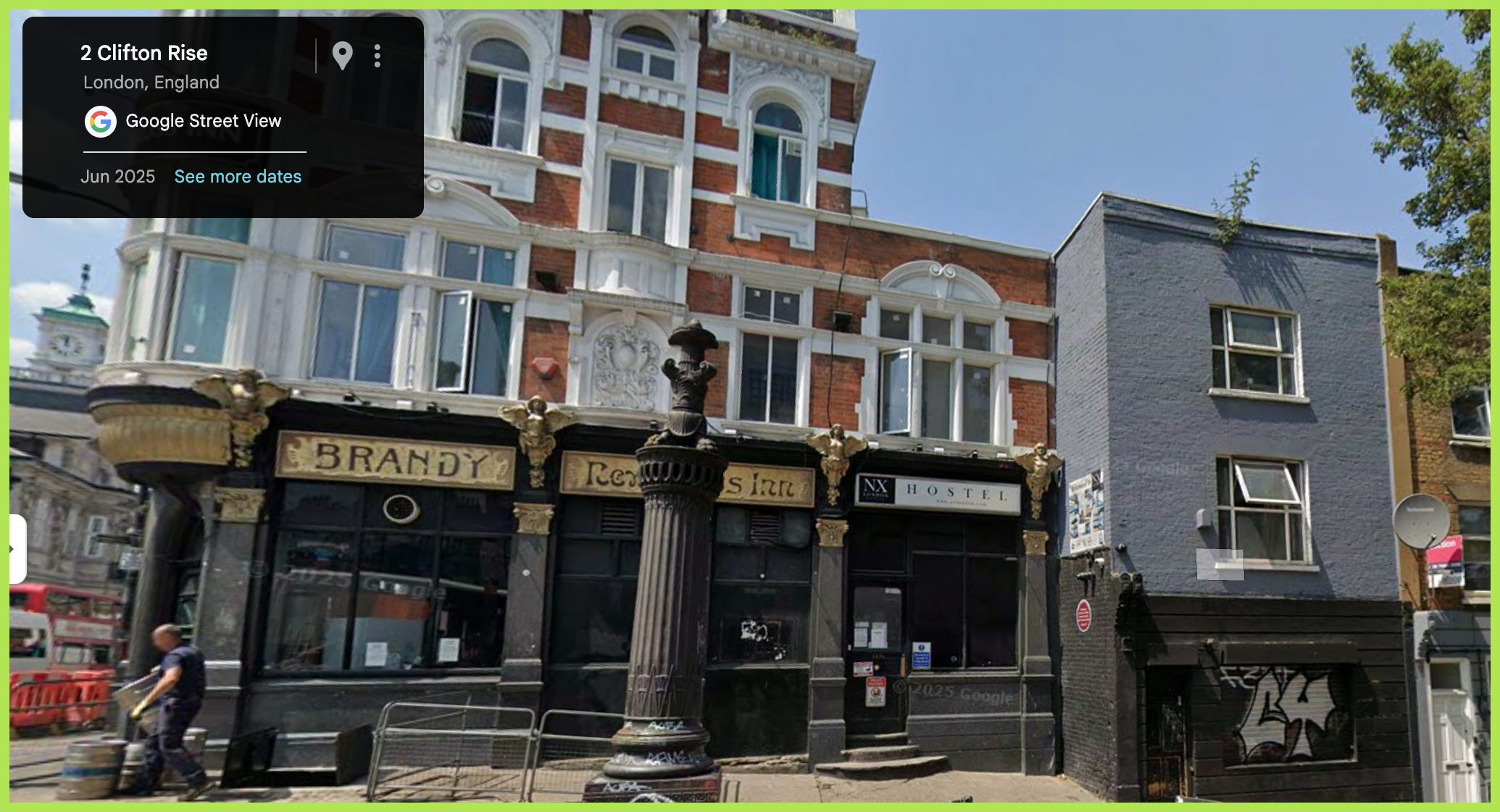
As an interesting aside, I lived in New Cross for a long time and actually at the opposite end of the street where the resistance began to the NF in 1977. The purple commemorative plaque is displayed on the wall, by my old local pub — the New Cross Inn.
In 1993, with the signing of the Maastricht Treaty [weirdly, I also lived there for three years] and the advent of the European Union, the far-right, as a political movement, began to rise again — Euroscepticism became a central tenet that the far-right could really coalesce around.
We saw the political rise and demise of the BNP and in the very same year that the EU became an official entity, the formation of UKIP — the UK Independence Party. UKIP, essentially, became the first real iteration of a far-right political party in modern UK politics. They were, at heart, nationalists and stood against the UK’s membership of the EU, but it wasn’t until the emergence of one, Nigel Farage, within their ranks, that an anti-immigration stance became their main focus.
Here’s a snippet from Wikipedia about UKIP’s sudden embrace of Farage and what changed. See if any of this rings a bell in today’s context.

Farage may parrot himself as a man of change, a man of reform, but at heart he has never deviated from his UKIP days. It’s only the media coverage and acceptance that has changed around him.
That brings us whooshing towards 2025 and where we stand now — is Nigel Farage a member of the far-right? Is it fair to label Reform UK as a far-right party?
2025 feels like an inflection point … Trump’s second term has undeniable far-right and fascist themes running through it like a stick of rock. Reform and Farage desperately seek to mimic Trump; so should we extricate Nigel Farage from the far-right label, as he so desperately wants?
I don’t think so. His roots lie in the far-right with UKIP. Let’s quickly see what, I think, makes up a far-right politician and compare to Reform/Farage in 2025.
Key Characteristics of the UK Far-Right:
Nationalism and Sovereignty.
Anti-Immigration and Anti-Asylum Rhetoric.
Anti-Elite and Anti-Establishment Sentiment.
Eurosceptic and Post-Brexit National Identity.
Culture Wars and Anti-Woke Politics.
Anti-Islam and Nativism.
Online Radicalisation and Conspiracy Theories.
A non-exhaustive list from some research and my head, and I’m certain there will be other characteristics that could also be included, but lets, for argument’s sake, use this to compare today’s populist Reform UK members, to the far-right.
Does Nigel Farage, as an example, fit any of these traits? I’d argue that he actually fits all of these traits.
How about, if we go way back to the beginning and put him at the French National Assembly in 1789 — where would Farage’s politics put him? He’d be sitting to the far-right of Louis XVI.
A new strand of extremist far-right politics that is currently having a little moment in the sun is Christian Nationalism. Another cut and paste from the good ole, US of A. When Farage swanned off from UKIP to rebadge as the Brexit Party, it floundered, lurching from one strange leader to the next. Such luminaries that have graced the position include Paul Nuttal [currently Deputy Chairman of Reform UK], Nathan Gill [currently awaiting sentencing for accepting bribes from Russia — when the leader of Reform UK in Wales], Gerrard Batten [who had Tommy Robinson as an advisor] and Neil Hamilton off of the telly.
UKIP is now, in 2025, fronted by Nic Tenconi, a man who so desperately wants to be seen as a new Mussolini figure, that he is regularly to be found screaming in the streets and attempting to rip up flags. Tenconi also heads up the UK wing of ultra far-right, Christian Nationalist group, Turning Point UK.
This ties up the current position of the UK’s extremist far-right in a lovely, neat bow. The melding of these two extremist positions all focuses to a single point, and that point is currently Nic Tenconi.
There is no evidence to link Farage and Tenconi in 2025, but they both led UKIP and are both paid up members of the far-right in British politics. One may be more extreme than the other, but be under no illusions, they are cut from the same cloth.
There you have it, a potted history of the far-right and it’s continued relevance today. So whenever someone on 𝕏 tells you to ‘define far-right’, feel free to point them in my direction.
If you made it here, thank you. If you haven’t signed up, then please do — it doesn’t have to be a paid subscription. I will put out my main pieces for free, but I don’t get paid for anything I do here, so if you are feeling generous, I would be eternally grateful, and you’d be helping me get stuck into more investigations. No worries if not, though. 😃

Couder, Auguste. “Opening Session of the General Assembly, 5 May 1789.” World History Encyclopedia. World History Encyclopedia, 21 Apr 2022, https://www.worldhistory.org/image/15695/opening-session-of-the-general-assembly-5-may-1789/. Web. 16 Oct 2025
you might like this
https://youtu.be/ImZKh3SqSmo
The far right as the far left are a disaster for society. In my opinion, the far left want to help everyone but not necessarily pay for it, the far right want everything for themselves by destroying everything in society.