

Palantir Entanglement
An Ai/Lord of the Rings Crossover

Yesterday in the House of Commons, Shabana Mahmood announced sweeping new police powers, including the roll-out of Ai technologies to all police forces in the UK. This got me thinking about one of the UK’s most prolific IT/data infrastructure providers — Palantir Technologies.
The name Palantir has become ubiquitous over the last few years, so much so that it’s founder and funder, Peter Thiel, has become a household name. Many people are aware that Palantir has had some dealings in the UK, specifically with the government, but I wonder if you realise, just quite how much. I’ll attempt to lay some of that out in the coming paragraphs, but suffice to say, the numbers involved may make your eyes water.
Let’s start at the beginning with a little explainer of the company, and its co-founder. Peter Thiel began life in the former West Germany in 1967 but was predominately raised in the USA — a similar pathway to his PayPal colleague, Elon Musk. He even spent time in South Africa as a child.
Studying Philosophy and Law at Stanford University, he was strongly influenced by French philosopher, René Girard, the developer of mimetic theory that posits human desire is copied behaviour that leads to rivalry and violence. During his time there, he founded the Stanford Review — a student newspaper that strongly opposed political correctness.
In 1998, alongside Max Levchin and Luke Nosek, Thiel co-founded Fieldlink, later renamed Confinity — a handheld device security business that evolved quickly into a digital wallet, eventually merging with Elon Musk’s X.com, an online bank and financial services website. After a year or so, Thiel replaced Musk as the head of X.com, closed down its financial services arms and renamed it to PayPal.
When PayPal was hoovered up by eBay in 2002 for $1.5B, Thiel created a successful but now defunct hedge fund — Clarium Capital and in 2003 he launched Palantir Technologies.
Other notable side hustles by Thiel included becoming the very first outside investor in Facebook in 2004. He has been involved in multiple startups and created multiple further hedge funds and venture capitalist companies — in 2011 he was, controversially, granted citizenship of New Zealand.
That gives you a little colour into the background of our pro/antagonist [delete as you feel necessary]. He is a serial moneymaker and clearly very intelligent human, something that I think that sets him against his old mucker and parallel capitalist, Elon Musk — Musk I believe has been an incredibly shrewd purchaser of products, rather than the creator of much. But let’s move on to Palantir — that’s what we’re all here for.
The early days of Palantir Technologies were borne from Thiel’s imagination and funded, in part, by the CIA — something I was unaware of until yesterday. Thiel took startup cash from the Agency’s investment arm, In-Q-Tel. In-Q-Tel is still in action today; its mission is to identify, adapt, and deliver emerging technologies that meet national security needs while fostering commercially viable products. Interestingly, the Q in the name of this covert/public department is lifted from the pages of James Bond and is a direct reference to the Q department in Ian Flemming’s novels.
From its early inception, Palantir shunned consumer markets in favour of embedding itself into government agencies and departments. It’s data analysis platform was perfectly designed to merge with new technologies in the military, especially. Thiel has repeatedly argued that Silicon Valley should work with the military and intelligence services, not distance itself from them.
Sidebar — did you know the origin of the name Palantir? I didn’t. The name is lifted from Lord of the Rings. An indestructible, dark crystal “Seeing Stone” used for long-distance communication and viewing distant events. A powerful tool that fell into the wrong hands.
It’s the glass orb used by Sauron to manipulate Saruman — if you’ve seen the movies, you’ll remember it well.
Thiel has many businessess named from Lord of the Rings, such as Mithril Capital, Rivendell One LLC and Valar Ventures. He is openly obsessed with with Tolkien mythology and its references to power, secrecy and elites.
I’m going to flash forward a bit, although the history of the company is fascinating, I want to bring it into line with more modern events and people. But before we skip ahead, I’d like to mention a famous essay he wrote in 2009 for the Cato Institute, named — The Education of a Libertarian.1
The opening line of the essay states, “I remain committed to the faith of my teenage years: to authentic human freedom as a precondition for the highest good.” It goes onto lay out some of his reasoning for being a Libertarian, but I feel as though that first sentence says a lot. Thiel and many of his fellow tech billionaires appear to be role-playing their teenage fantasies in real life. Musk, has often been described as a billionaire teenager, and the views of these Silicon Valley evangelists rarely sound like maturely thought out adult opinions.
Thiel’s world view was formed as a teenager and young philosophy student — he managed to garner enough money to make his founding years studies, a reality.
The essay lays out his vision for a world not controlled by politicians, but his vision: “The fate of our world may depend on the effort of a single person who builds or propagates the machinery of freedom that makes the world safe for capitalism.”
Pretty sinister, right, but the most worrying part of the relatively short essay, is this statement:
“Most importantly, I no longer believe that freedom and democracy are compatible.”
His strong Libertarian world view continues to this day and is part of Palantir’s ethos from top to bottom, driving its incessant march to global domination. Thiel has been instrumental in the rise of Donald Trump and, more recently, bankrolled JD Vance. Peter Thiel is not a conventional tech billionaire — he is an ideologue who sees technology as a way to replace democratic processes with systems controlled by wealthy elites.
So what, exactly, does this global behemoth do? Palantir feels nebulous to many, but in essence … ‘It’s a US-based data analytics and software company that specialises in integrating, analysing, and visualising vast amounts of data — often for governments, defence agencies, intelligence services, and large corporations.’
You can tell that I lifted that descriptor from an online source — it’s the headline used to sum up the company’s role. The next statement maybe clarifies things a bit more:
‘Its core pitch is simple but powerful: bring together fragmented datasets, spot patterns humans can’t, and support decision-making in high-stakes environments.’
A platform used by massive organisations to control data in a way that would otherwise be impossible, due to the size and scope of their mission; to replace split second decisions by humans. It aggregates monstrous amounts of data into more useable functions. This is where we return to the UK and where Palantir plugged itself into our National Health Service during the COVID-19 pandemic.
With speed more of an issue than procedure, Palantir was incorporated into the doomed Test and Trace system, to help move things on from Dido Harding’s initial vision of using Microsoft Excel to manage the data of 67,000,000 people. During that time, it created a repository for data containing information such as infection rates, availability of beds and medicines, waiting lists and vaccine roll-outs.
Palantir specialises in vast data aggregation so it was a niche fit. As we now know, it gave Thiel’s company a prominent foot in the door of the NHS — something they have never looked back from. That being said, the Conservative government was dishing out contracts to Palantir as far back as 2015, so it is not a recent phenomenon.
The COVID-19 Data Store built by Palantir underpinned another of their many NHS bids, the Federated Data Platform (FDP). The FDP is a layer of software provided by Palantir to link NHS databases and, in theory, provide routes to lower waiting lists, better patient outcomes etc. It centralises how decisions are seen, prioritised, and acted upon across the health system. One of the main criticisms of this platform — a platform built in a time of national emergency has crept into the mainstream NHS and is now a determining factor in huge policy decisions.
Critics of the FDP argue that the lack of transparency within Palantir’s software gives it scope to manipulate and influence decisions based on population data — that Thiel’s personal world view does not align with a public health service such as our NHS. From a financial standpoint, the FDP is reported to have been signed off in 2023 at £330M. As it turns out, this gargantuan figure is a drop in the ocean of cash that our government has paid to Palantir.
I’m going to make a list now, from a spreadsheet I downloaded from the government’s Contracts Finder website2. I think you may be surprised at some of the entries — it’s long, so bear with. I’ll be back afterwords to mop up your shock!
01/09/2015 — £734,834 for Enterprise Analytical Platform and Intelligence Service. GDS [Government Digital Service].
11/05/2018 — £1,666,000 for Procurement of Data Science Services Pilot for Decision Support to Naval Personnel Management. Ministry of Defence.
23/04/2020 — £5,973,750 for Provision of Data Integration Services. Ministry of Defence.
12/06/2020 — £908,333.33 for Provision of data management platform services. Department of Health and Social Care.
12/06/2020 — £1,500,000 for Purchase of Palantir Foundry Data Management Platform. NHS Arden.
31/08/2020 — £26,185,733 for Provision of a Foundry Data Connector. Crown Commercial Services [purchasing body of the Cabinet Office].
11/12/2020 — £23,500,000 for Provision of Data Management Platform Services. NHS Arden.
26/03/2021 — £1,200,000,000 [£1.2T] for Back Office Software. Crown Commercial Services.
12/08/2021 — £100,000 for Transition of the Adult Social Care Dashboard from Palantir to EDGE. Department of Health and Social Care.
23/10/2021 — £1,666,666.66 for Extension of Data Integration Services. Ministry of Defence.
01/02/2022 — £833,333.33 for Data Integration Services. Ministry of Defence.
03/03/2022 — £10,000,000 for Data Integration and Management. Ministry of Defence.
08/03/2022 — £0 for Ukrainian Humanitarian Relief Case Management System. Department for Levelling Up, Housing and Communities.
31/05/2022 — £250,000 for Project Marconi, a proof of concept military application. Ministry of Defence.
20/06/2022 — £125,000 for Palantir Foundry Engineering Support. NHS North of England.
28/07/2022 — £250,000 for Workforce Baselining and Benchmarking Discovery Report. Ministry of Defence.
25/08/2022 — £11,500,000 for Contract Extension of the Data Platform Services. NHS England.
13/09/2022 — £1,000,000,000 [£1T] for Information Technology Commercial Framework. Highways England.
22/09/2022 — £4,500,000 for Palantir Foundry Enterprise. Department for Levelling Up, Housing and Communities.
25/11/2022 — £75,215,711.11 for an Enterprise Agreement for the provision of the Palantir software tool-set to accommodate the UK MOD’s demand, at all security classifications, for the next three years in line with data strategies. Ministry of Defence.
12/12/2022 — £137,500 for Implementation and Engineering Services. NHS Shared Business Services.
03/01/2023 — £825,000 for Palantir Foundry Implementation and Engineering Services. North of England Commissioning Support.
20/03/2023 — £199,800 for Defence Medical Services (DMS) — Placements Consultants Monitoring Application. Ministry of Defence.
27/03/2023 — £83,500 for Palantir Foundry Support. London Ambulance Service NHS Trust.
09/06/2023 — £24,925,000 for Palantir Foundry Transition & Exit Contract [post Covid]. NHS England.
13/09/2023 — £1,500,000 for Trade Analytics Solution. DEFRA.
22/11/2023 — £182,242,760 for Federated Data Platform and Associated Services. NHS England.
20/09/2024 — £412,500 for Foundry Support for the Supply Chain FDP Product. Northumbria Healthcare NHS Foundation Trust.
30/01/2025 — £500,000 for Development of Strategic AI Platform. Coventry City Council.
I did say the list was long!
So, what can we take from this decade and more of Palantir integration into our lives?
Well, firstly, I’d say that every single person in the country has used or is part of a Palantir network. Look at the government departments listed above. From the NHS to the military, to farms and our road network, Palantir is entangled, intrinsically, throughout our lives, whether we like it or not. The Conservatives made some very sweeping executive decisions to embed this company into the very fabric of the United Kingdom — going back to David Cameron’s administration.
Secondly, the sums of money involved to make this happen, and I did promise to make your eyes water, are well into the trillions of pounds. According to the SUM function in my spreadsheet, the list above totals a monumental, £2,575,735,421.43. Two point five trillion pounds, give or take … and these are only the figures published on the government’s website, there are other costs not listed.
For example, the Federated Data Platform was awarded at £182,242,760, but we know from more recent reports that this was only the starting point and, at last count, had risen to ≈ £330,000,000.
There are many reports that Palantir has already begun working, covertly, with police forces across the country, but the government has not published these contracts online, as yet. According to reporting by Liberty Investigates3, at least six local polices forces have been working with Palantir on the interestingly titled, Project Nectar.
This project purportedly processes data in real time for the police and can profile people within nanoseconds. The slightly dark side of that is, if the report is to be believed, the profiling data can produce information on people who are the victims of crime or vulnerable individuals. It can go so far as to include their sex life and membership of a trade union.
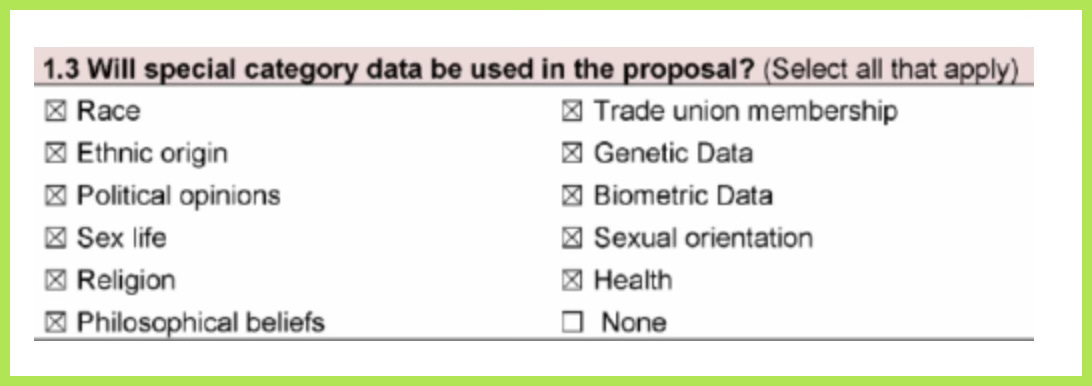
There has already been some kickback to this proposed ‘predictive policing’ in the USA and in Germany, with contracts being cancelled after public outrage at their data being used in such a fashion.
So what of the UK? Our latest Home Secretary appears to have no such qualms and is actively seeking to roll out more Ai tech into our lives. She promised, yesterday, that every force in the country will shortly be able to use this controversial tech with roaming mobile facial recognition vans and the integration of Palantir networks throughout the police force [that is the subtext].
While the country is embroiled in a heated debate about Digital ID cards, my contention is that that is the very least of our worries when it comes to state sponsored tech surveillance. Peter Thiel and his contemporaries already know everything about us, and our government is opening doors across every department without a thought of how dangerous it could be.
The contracts I listed above are not indefinite, they are fixed term deals; they will need to be renegotiated and renewed. But by underpinning the entire IT infrastructure of the United Kingdom with this company, I’d argue that we are now entirely dependent on Palantir Technologies. If the government suddenly decided to cancel those contracts, the country would grind to a halt. We are fully dependent on Peter Thiel — exactly as he laid out in his 2009 essay:
“The fate of our world may depend on the effort of a single person”
So where does this leave us? Nationally, we’re already bought and paid for. On a more personal level, have we been stripped of our choice? Have we already lost our ability to make decisions that can influence anything meaningful in the political sense? I’d argue yes, to a point. Again, as Thiel stated, ‘freedom and democracy are no longer compatible’.
As a nation, we voted to change the last Conservative administration, but Labour are continuing the roll-out of Palantir’s stranglehold on our public infrastructure. Does this mean that our freedom and democracy have been annulled? Possibly, but what I would assert, is that none of us voted for this.
I’ll leave you with this chilling synopsis of their departments. Palantir’s platforms are highly customised and deeply embedded into their client’s operations:
Gotham — Intelligence, policing, counter-terrorism, military use.
Foundry — Commercial and civilian organisations (healthcare, manufacturing, logistics).
Apollo — Infrastructure layer for deploying Palantir software securely across environments.
These systems do not just analyse data — they often shape how institutions think, prioritise, and act.
If you made it here, thank you. If you haven’t signed up, then please do — it doesn’t have to be a paid subscription. I will put out my main pieces for free, but I don’t get paid for anything I do here, so if you are feeling generous, I would be eternally grateful, and you’d be helping me get stuck into more investigations. No worries if not, though. 😃

Source — Cato Unbound
Source — Contracts Finder
Source — Liberty Investigates
This breakdown of the UK's Palantir contracts is eye-opening. The scale of vendor lock-in here is kinda wild when contracts approach £2.5T across critical infrastructure. I worked on a much smaller govt procurement project once and even at that scale, extracting yourself from entrenched vendors becomes nearimpossible after a few renewal cycles. The real risk isnt just surveillance but losing policy autonomy to whoever controls the data layer.
Worrying to say the least. It seems all of our eggs are very much in the one basket. Never a good idea.